

Can a CO2 laser be used for welding? This is a question that often comes up in industrial applications, and as a CO2 laser supplier, I'm here to shed some light on this topic.

Understanding CO2 Lasers
CO2 lasers are a type of gas laser that uses a mixture of carbon dioxide, nitrogen, and helium as the lasing medium. They typically operate in the infrared region, with a wavelength of around 10.6 micrometers. CO2 lasers are known for their high power output, good beam quality, and relatively low cost compared to some other types of lasers. They have been widely used in various industries for cutting, engraving, and marking applications.
The Principle of Laser Welding
Laser welding is a process that uses a high - intensity laser beam to melt and join materials together. The laser beam provides a concentrated source of energy that can quickly heat the materials to their melting point. When the molten materials cool and solidify, a strong weld is formed. The key advantages of laser welding include high precision, minimal heat - affected zones, and the ability to weld a wide range of materials, including metals and non - metals.
Using CO2 Lasers for Welding
Welding Non - metals
CO2 lasers are well - suited for welding non - metallic materials. Non - metals such as plastics, wood, and ceramics can absorb the infrared radiation emitted by CO2 lasers very effectively. When the CO2 laser beam hits the non - metal surface, the energy is absorbed, causing the material to heat up and melt. This makes CO2 lasers an ideal choice for welding applications in industries such as packaging, furniture manufacturing, and electronics.
For example, in the packaging industry, CO2 lasers can be used to weld plastic films together to create sealed packages. The high - precision nature of the laser beam ensures that the welds are strong and leak - proof. In the furniture industry, CO2 lasers can be used to join wooden components, providing a clean and precise weld that does not require additional fasteners.
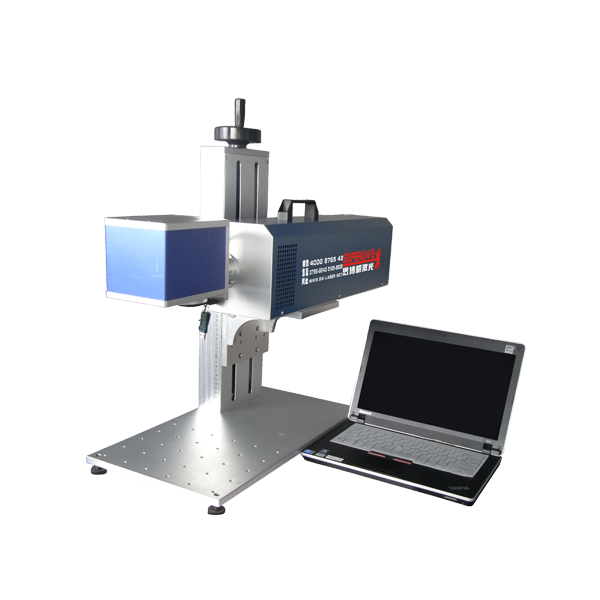
If you are interested in using CO2 lasers for non - metal welding, our CO2 Laser Marking Machine For Non - metals can be a great option. It is designed to provide high - quality marking and welding capabilities for non - metallic materials.
Welding Metals
While CO2 lasers are not as commonly used for metal welding as some other types of lasers, such as fiber lasers, they can still be used for certain metal welding applications. Metals generally have lower absorption rates for the 10.6 - micrometer wavelength of CO2 lasers compared to non - metals. However, with the use of appropriate surface treatments and beam delivery systems, CO2 lasers can achieve successful metal welding.
For thin metal sheets, CO2 lasers can be used to create high - quality welds. The high power output of CO2 lasers can quickly heat the metal to its melting point, and the precise control of the laser beam allows for accurate weld placement. In some cases, CO2 lasers can be used for welding metals in industries such as automotive manufacturing and aerospace, where precision and quality are of utmost importance.
Advantages of Using CO2 Lasers for Welding
High Power and Efficiency
CO2 lasers can generate high power levels, which means they can weld thick materials or complete welding tasks quickly. This high power output also allows for efficient energy utilization, reducing the overall cost of the welding process.
Versatility
As mentioned earlier, CO2 lasers can be used to weld both non - metals and metals. This versatility makes them a valuable tool in a wide range of industries. Whether you are working with plastics, wood, or thin metal sheets, a CO2 laser can provide a reliable welding solution.
Precision
CO2 lasers offer high precision in welding. The laser beam can be focused to a very small spot size, allowing for detailed and accurate welds. This is particularly important in industries where small parts need to be joined with high precision, such as in the electronics industry.
Limitations of Using CO2 Lasers for Welding
Metal Absorption
As previously discussed, metals have relatively low absorption rates for the 10.6 - micrometer wavelength of CO2 lasers. This means that additional measures, such as surface treatments or the use of absorptive coatings, may be required to improve the welding process.
Beam Quality
Although CO2 lasers have good beam quality, they may not be as good as some other types of lasers in terms of beam divergence and focusability. This can limit their effectiveness in some high - precision welding applications.
Applications of CO2 Laser Welding
Packaging Industry
In the packaging industry, CO2 lasers are used to weld plastic films, cardboard, and other non - metallic materials. This helps to create sealed packages that are both durable and aesthetically pleasing.
Furniture Manufacturing
CO2 lasers can be used to join wooden components in furniture manufacturing. The precise welds provided by CO2 lasers ensure that the furniture is strong and well - constructed.
Electronics Industry
In the electronics industry, CO2 lasers can be used to weld small electronic components, such as circuit boards and connectors. The high precision of CO2 lasers is essential for ensuring the proper functioning of these components.
Our Portable CO2 Laser Marking Machine
If you are looking for a more flexible and convenient solution for welding and marking, our Portable CO2 Laser Marking Machine is a great choice. It offers the same high - quality performance as our standard CO2 lasers but with the added benefit of portability. You can easily move the machine to different locations and perform welding and marking tasks on - site.
Contact Us for Purchase and Consultation
If you are interested in using CO2 lasers for welding or have any questions about our products, we encourage you to contact us. Our team of experts is ready to provide you with detailed information and help you choose the right CO2 laser solution for your specific needs. Whether you are a small business or a large industrial manufacturer, we can offer customized solutions to meet your requirements.
References
- "Laser Welding: Principles and Practices" by John C. Ion
- "Industrial Laser Applications" by G. Chryssolouris


