

Can 3D laser be used for cultural heritage preservation?
In recent years, the application of 3D laser technology has expanded into various fields, and one area that has drawn significant attention is cultural heritage preservation. As a 3D laser supplier, I have witnessed firsthand the potential of this technology in safeguarding our rich cultural heritage.
The Basics of 3D Laser Technology
3D laser technology operates on the principle of emitting laser beams to scan and capture the physical characteristics of an object. These lasers can measure distances with high precision, creating a detailed three - dimensional model of the object. There are different types of 3D lasers, such as CO2 lasers and fiber lasers, each with its own unique properties and applications.
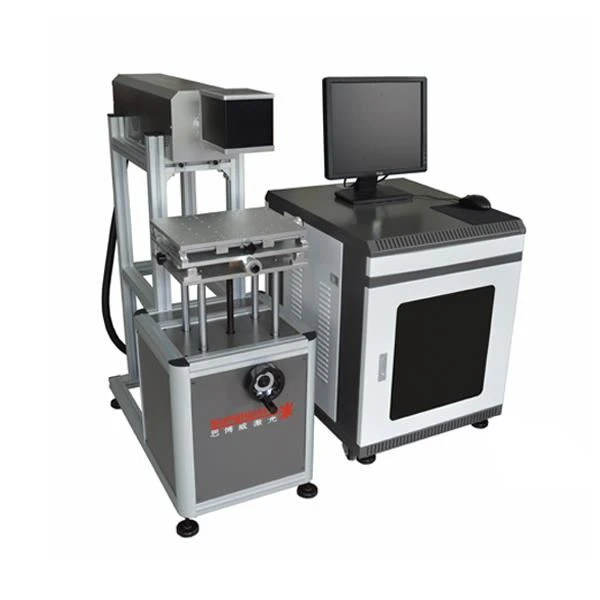
The 3D CO2 Laser Marking and Engraving Machine is well - known for its ability to work on a wide range of materials. It can be used for marking and engraving on materials like wood, plastic, and some metals. The CO2 laser beam is absorbed by the material, causing it to heat up and change its surface properties, which is useful for creating detailed patterns and inscriptions.
On the other hand, the 3d Fiber Laser Marking&Engraving Machine offers high - energy density and excellent beam quality. It is particularly suitable for marking on hard materials such as metals and ceramics. The fiber laser can achieve very fine and precise markings, which is crucial when dealing with delicate cultural artifacts.
The 3D Fiber Laser Engraving&Cutting Machine combines the functions of engraving and cutting. It can be used to create three - dimensional shapes and patterns on materials, which can be extremely useful in replicating or restoring cultural heritage objects.
Applications of 3D Laser in Cultural Heritage Preservation
Documentation and Digital Archiving
One of the primary applications of 3D laser technology in cultural heritage preservation is documentation. By using 3D laser scanners, we can create highly accurate digital models of cultural artifacts, buildings, and archaeological sites. These digital models serve as a permanent record of the object's current state, which is essential for research, conservation planning, and future reference.
For example, in the case of ancient sculptures, a 3D laser scanner can capture every detail of the sculpture's surface, including its texture, shape, and any existing damage. This digital model can then be stored in a digital archive, ensuring that the information about the sculpture is preserved for future generations.
Restoration and Conservation
3D laser technology also plays a crucial role in the restoration and conservation of cultural heritage. The detailed 3D models created by laser scanners can be used to analyze the structure and condition of an object. Conservationists can use this information to develop appropriate restoration strategies.
For instance, if a part of an ancient building is damaged, a 3D laser scan can provide accurate measurements and details of the original structure. This allows conservationists to create precise replicas of the damaged parts, which can then be used to restore the building to its former glory.
Reconstruction of Lost or Damaged Heritage
In some cases, cultural heritage has been lost or damaged due to natural disasters, wars, or human activities. 3D laser technology can be used to reconstruct these lost or damaged objects based on available historical records and partial remains.
By combining historical data with 3D laser scanning of related artifacts or sites, researchers can create virtual reconstructions of lost cultural heritage. This not only helps in understanding the original appearance of the heritage but also provides a way to present it to the public.
Advantages of Using 3D Laser in Cultural Heritage Preservation
Non - invasive and Non - destructive
One of the most significant advantages of 3D laser technology is that it is non - invasive and non - destructive. Traditional methods of documentation and analysis often require physical contact with the cultural heritage object, which can cause damage. In contrast, 3D laser scanners can capture detailed information from a distance without touching the object, minimizing the risk of damage.
High Precision and Accuracy
3D laser technology offers high precision and accuracy in capturing the physical characteristics of cultural heritage objects. The measurements obtained by laser scanners are extremely accurate, which is crucial for creating detailed digital models and for restoration work.
Efficiency
Using 3D laser technology can significantly improve the efficiency of cultural heritage preservation. The scanning process is relatively fast, and the data can be processed and analyzed quickly. This allows conservationists and researchers to save time and resources in their work.
Challenges and Limitations
Despite its many advantages, there are also some challenges and limitations associated with using 3D laser technology in cultural heritage preservation.
Cost
The cost of 3D laser equipment and the associated software can be relatively high. This can be a significant barrier for some cultural heritage institutions, especially those with limited budgets.
Technical Expertise
Operating 3D laser scanners and processing the data requires a certain level of technical expertise. Not all cultural heritage institutions have the necessary staff with the required skills, which can limit the widespread adoption of this technology.
Data Management
The large amount of data generated by 3D laser scanners can be difficult to manage and store. Cultural heritage institutions need to have appropriate data management systems in place to ensure the long - term preservation and accessibility of the data.

Conclusion
In conclusion, 3D laser technology has great potential for cultural heritage preservation. It offers a non - invasive, high - precision, and efficient way to document, restore, and reconstruct cultural heritage. Although there are some challenges and limitations, the benefits of using 3D laser technology far outweigh the drawbacks.
As a 3D laser supplier, we are committed to providing high - quality 3D laser equipment and solutions to support cultural heritage preservation efforts. If you are involved in cultural heritage preservation and are interested in exploring the use of 3D laser technology, we invite you to contact us for a detailed discussion on how our products can meet your specific needs. We look forward to working with you to safeguard our precious cultural heritage for future generations.
References
- Chen, X., & Zhang, Y. (2018). Application of 3D laser scanning technology in cultural heritage protection. Journal of Cultural Heritage, 32, 123 - 130.
- Li, M., & Wang, Z. (2019). 3D laser technology for the restoration of ancient buildings. International Journal of Heritage Science, 7(2), 89 - 98.
- Smith, J. (2020). The role of 3D laser scanning in archaeological research. Archaeological Review, 45(3), 210 - 225.


