

Hey there! As a supplier of Microscope, I get asked a lot about what the resolution of a microscope is. So, I thought I'd take a few minutes to break it down for you in a way that's easy to understand.
Let's start with the basics. Resolution in the context of a microscope refers to its ability to distinguish between two closely spaced objects as separate entities. In simpler terms, it's how clear and detailed the image you see through the microscope is. A high - resolution microscope can show you fine details, while a low - resolution one might make closely spaced objects look like one big blob.
There are a few factors that affect the resolution of a microscope. One of the most important is the wavelength of the light used. In optical microscopes, which are the most common type, visible light is used. The shorter the wavelength of the light, the higher the potential resolution. For example, blue light has a shorter wavelength than red light. So, if a microscope uses blue light, it can potentially achieve a higher resolution compared to one that uses red light.
Another crucial factor is the numerical aperture (NA) of the microscope's objective lens. The NA is a measure of the lens's ability to gather light and resolve fine details. A higher NA means the lens can collect more light and provide a better resolution. Microscopes with high - NA objective lenses are generally more expensive but offer much better performance when it comes to seeing small details.
Let's talk about the different types of microscopes and their typical resolutions. Optical microscopes, which are great for general biological and material science applications, have a resolution limit of around 200 nanometers. This means that two objects closer than 200 nanometers apart will appear as one under an optical microscope.
Electron microscopes, on the other hand, can achieve much higher resolutions. Transmission electron microscopes (TEM) can resolve details down to the atomic level, with resolutions as high as 0.1 nanometers. Scanning electron microscopes (SEM) are also quite powerful, with resolutions in the range of a few nanometers. These high - resolution electron microscopes are used in advanced research, such as studying the structure of viruses or the surface of materials at a very fine scale.
So, why does resolution matter? Well, if you're a scientist studying cells, for example, a high - resolution microscope can help you see the internal structures of the cells more clearly. You can observe organelles like mitochondria and the endoplasmic reticulum in greater detail, which can lead to new discoveries about how cells function.
In the field of materials science, a high - resolution microscope can help researchers analyze the microstructure of materials. They can study the grain boundaries, defects, and other features that affect the material's properties. This information is crucial for developing new materials with improved performance, such as stronger metals or more efficient semiconductors.
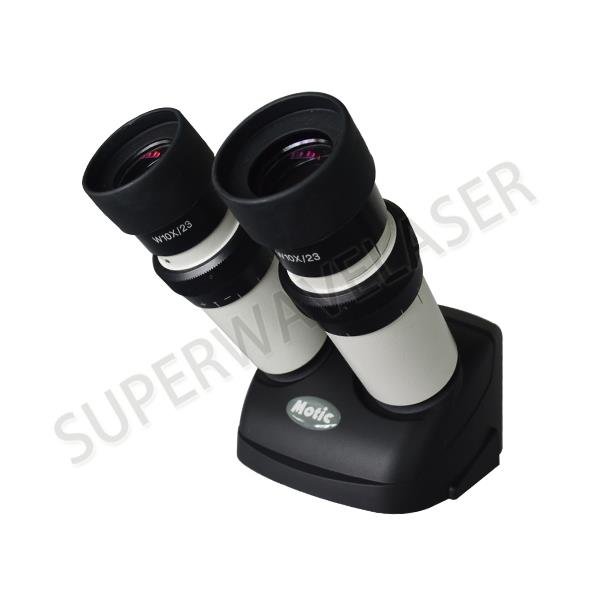
As a microscope supplier, I know that choosing the right microscope with the appropriate resolution for your needs is essential. If you're working on a project that requires high - resolution imaging, you'll need to invest in a more advanced microscope. But if you're just doing some basic observation, a standard optical microscope might be sufficient.
We offer a wide range of microscopes at different price points and with varying resolutions. Whether you're a student, a professional researcher, or a hobbyist, we have a microscope that can meet your needs. Our team of experts is always on hand to help you choose the right microscope for your specific application.
If you're interested in learning more about our microscopes or need help in selecting the right one, don't hesitate to reach out. We're here to make the process as easy as possible for you. Whether you have questions about resolution, magnification, or any other aspect of microscopes, we're happy to assist.
Contact us today to start a conversation about your microscope needs. We're looking forward to working with you and helping you find the perfect microscope for your projects.
References
- "Microscopy: The Fundamentals" by David B. Murphy
- "Principles of Microscopy" from the Royal Microscopical Society


