

Hey there! As a supplier of high - quality Microscopes, I often get asked about the maximum magnification of a typical light microscope. Let's dive right into it.
First off, what exactly is a light microscope? Well, it's a tool that uses visible light and a system of lenses to magnify small objects. It's one of the most common types of microscopes you'll find in labs, schools, and even some hobbyist setups. And if you're looking for a great selection of microscopes, check out Microscope.
Now, the maximum magnification of a typical light microscope usually ranges from 1000x to 2000x. But why is there a range, and what factors determine this?
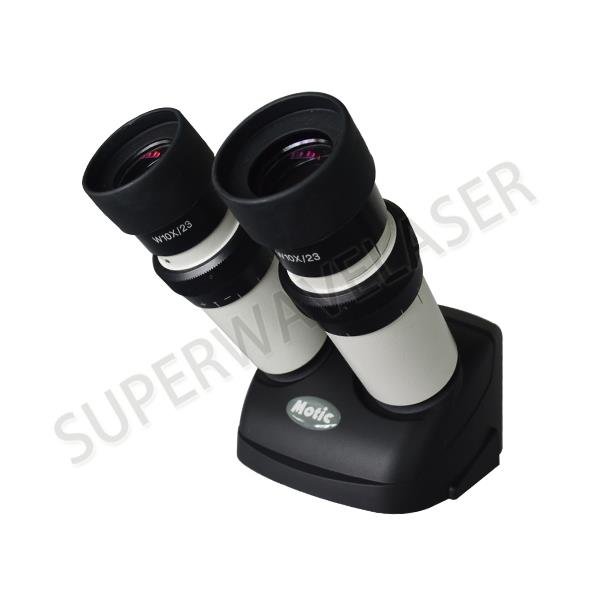
Factors Affecting Maximum Magnification
1. Objective Lenses
The objective lenses are the most important part when it comes to magnification. Most light microscopes come with a set of objective lenses, typically 4x, 10x, 40x, and 100x. The 4x lens is the lowest magnification, great for getting a wide - view of the specimen. The 10x lens gives you a bit more detail, and the 40x lens is where you start to see some really fine features. The 100x lens, also known as the oil - immersion lens, is the highest - power objective lens on a typical light microscope.
When you combine the magnification of the objective lens with the magnification of the eyepiece (usually 10x), you get the total magnification. For example, if you're using the 40x objective lens and a 10x eyepiece, the total magnification is 400x (40 x 10). And with the 100x objective lens and a 10x eyepiece, you reach 1000x magnification.
2. Resolution
Resolution is another crucial factor. It refers to the ability of the microscope to distinguish between two closely - spaced objects. Even if you increase the magnification, if the resolution isn't good enough, the image will just look blurry. The resolution of a light microscope is limited by the wavelength of visible light. The shorter the wavelength, the better the resolution.
The theoretical limit of resolution for a light microscope is about 0.2 micrometers. Once you go beyond the magnification that corresponds to this resolution limit, you're just magnifying the blur. That's why, even though you might be able to technically go up to 2000x magnification, the image quality at that level might not be very good.
3. Optical Quality
The quality of the lenses in the microscope also plays a big role. High - quality lenses are made from special types of glass and are carefully ground and polished. They can correct for things like chromatic aberration (where different colors of light focus at different points) and spherical aberration (where light rays from the edges of the lens focus at a different point than those from the center).
A microscope with better optical quality can usually achieve higher magnification with better image clarity. Cheaper microscopes might have lower - quality lenses, which can limit the useful magnification.
Practical Applications at Different Magnifications
Low Magnification (40x - 100x)
At low magnifications, you can get a general overview of the specimen. For example, if you're looking at a plant leaf, you can see the overall structure of the leaf, the veins, and maybe some large cells. This is useful for quickly identifying the type of specimen or getting a sense of its size and shape.
Medium Magnification (400x)
At 400x magnification, you start to see a lot more detail. You can observe the individual cells of a plant or animal tissue. You might be able to see the nucleus of a cell, the cell membrane, and some of the larger organelles. This is a common magnification used in biology classes for studying cells.
High Magnification (1000x - 2000x)
At these high magnifications, you can see even smaller structures within the cell, like mitochondria or the endoplasmic reticulum. However, as I mentioned earlier, the image quality might start to degrade at the higher end of this range.
Why Knowing the Maximum Magnification Matters
If you're a researcher, knowing the maximum magnification of your microscope is crucial for choosing the right equipment for your experiments. For example, if you're studying bacteria, you'll need a microscope that can reach at least 1000x magnification to see the individual bacteria clearly.
If you're a teacher, understanding the maximum magnification helps you plan your lessons. You can show your students different levels of detail at different magnifications, which can make the learning experience more engaging.
Our Microscopes and Their Magnification Capabilities
As a microscope supplier, we offer a wide range of microscopes with different maximum magnifications. Whether you're a beginner looking for a simple microscope for home use or a professional researcher in need of a high - end instrument, we've got you covered.
Our entry - level microscopes usually have a maximum magnification of around 400x, which is great for basic biological studies. Our mid - range microscopes can reach up to 1000x magnification, and our top - of - the - line models can go up to 2000x magnification.
All of our microscopes are made with high - quality lenses and components to ensure the best possible image quality at all magnifications. We also offer after - sales support and training to help you get the most out of your microscope.
Contact Us for Your Microscope Needs
If you're in the market for a microscope, whether it's for a school, a research lab, or just for your own personal interest, we'd love to hear from you. We can help you choose the right microscope based on your needs and budget.
Don't hesitate to reach out to us to start a conversation about your microscope requirements. We're here to make sure you get the best microscope for your specific situation.
References
- "Microbiology: An Introduction" by Gerard J. Tortora, Berdell R. Funke, and Christine L. Case
- "Optics for Dummies" by P. Michael Fracchia


