

In the world of lasers, the interaction between the gain medium and a Q-switch is a fascinating and crucial topic. As a Q-switch supplier, I have witnessed firsthand the significance of this interaction in the performance and functionality of laser systems. In this blog post, I will delve into the details of how the gain medium and Q-switch interact, exploring the principles, mechanisms, and implications of this relationship.
Understanding the Basics: Gain Medium and Q-Switch
Before we dive into the interaction, let's first clarify what the gain medium and Q-switch are. The gain medium is the heart of a laser system, responsible for generating and amplifying light through the process of stimulated emission. It can be a solid, liquid, or gas, and each type of gain medium has its own unique properties and characteristics. Common examples of gain media include lasers, such as Nd:YAG, Ti:sapphire, and CO2 lasers.
On the other hand, a Q-switch is a device used to control the output of a laser by modulating the quality factor (Q-factor) of the laser cavity. The Q-factor is a measure of the efficiency of the laser cavity in storing and releasing energy. By rapidly changing the Q-factor, the Q-switch can create short, high-intensity pulses of laser light. This is particularly useful in applications where high peak power is required, such as laser marking, micromachining, and medical treatments.
The Interaction Mechanism
The interaction between the gain medium and Q-switch is a complex process that involves several key steps. Let's break it down into a simplified sequence to better understand how it works:
- Energy Storage in the Gain Medium: When the laser is pumped, energy is transferred from the pump source to the gain medium, exciting the atoms or molecules within it to higher energy levels. This creates a population inversion, where there are more atoms or molecules in the excited state than in the ground state. The gain medium acts as an energy reservoir, storing the energy until it is released.
- Low Q-State: Initially, the Q-switch is in a low Q-state, which means that the laser cavity is highly lossy. In this state, the photons generated in the gain medium are quickly absorbed or scattered, preventing them from building up into a coherent laser beam. As a result, the energy in the gain medium continues to accumulate, and the population inversion grows.
- Rapid Q-Switching: At a specific time determined by the Q-switch control system, the Q-switch is rapidly switched to a high Q-state. This reduces the losses in the laser cavity, allowing the photons to bounce back and forth between the cavity mirrors, undergoing multiple passes through the gain medium. During each pass, the photons stimulate the emission of additional photons, leading to a rapid build-up of the laser intensity.
- Pulse Generation: The sudden increase in the laser intensity causes a large number of photons to be emitted from the gain medium in a short period of time, resulting in the generation of a high-intensity laser pulse. This pulse is typically much shorter in duration and higher in peak power than the continuous-wave output of the laser.
- Energy Depletion: After the pulse is generated, the energy stored in the gain medium is depleted, and the population inversion is reduced. The Q-switch is then switched back to the low Q-state, and the process repeats itself, generating a series of laser pulses at a specific repetition rate.
Factors Affecting the Interaction
The interaction between the gain medium and Q-switch is influenced by several factors, which can have a significant impact on the performance of the laser system. Some of the key factors include:
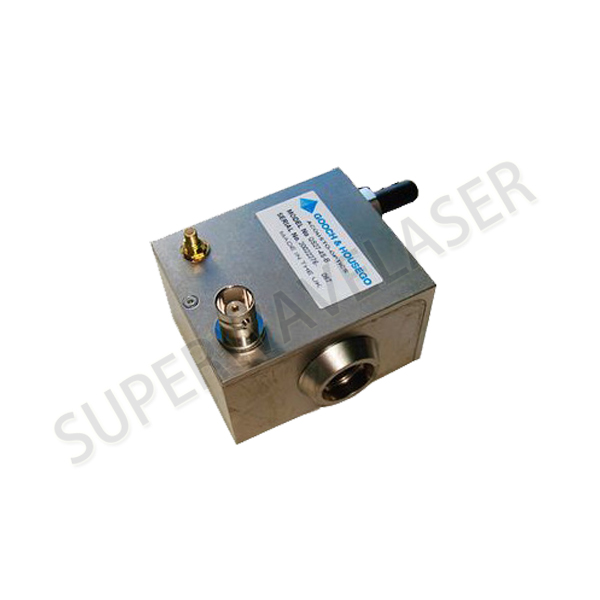
- Gain Medium Properties: The properties of the gain medium, such as its energy level structure, absorption and emission cross-sections, and fluorescence lifetime, play a crucial role in determining the energy storage and release characteristics. Different gain media have different optimal operating conditions and are suitable for different types of Q-switching applications.
- Q-Switch Type and Design: There are several types of Q-switches available, including electro-optic, acousto-optic, and passive Q-switches. Each type has its own unique operating principles, advantages, and limitations. The design of the Q-switch, such as its switching speed, insertion loss, and extinction ratio, also affects the performance of the laser system.
- Pump Power and Pulse Duration: The pump power and pulse duration determine the amount of energy stored in the gain medium and the rate at which it is released. Higher pump powers and longer pulse durations can result in higher energy storage and more intense laser pulses, but they also increase the risk of damage to the gain medium and Q-switch.
- Cavity Design and Alignment: The design and alignment of the laser cavity are critical for ensuring efficient energy transfer between the gain medium and Q-switch. The cavity length, mirror reflectivity, and mode structure all affect the laser performance and the quality of the output pulses.
Applications and Benefits
The interaction between the gain medium and Q-switch has a wide range of applications in various fields, including industrial, medical, and scientific research. Some of the common applications include:
- Laser Marking and Engraving: Q-switched lasers are widely used for marking and engraving on a variety of materials, such as metals, plastics, ceramics, and glass. The high peak power of the laser pulses allows for precise and permanent marking with minimal heat damage to the material.
- Micromachining: In micromachining applications, Q-switched lasers are used to perform precise cutting, drilling, and etching of micro-components. The short pulse duration and high peak power of the laser pulses enable high-resolution machining with minimal thermal effects.
- Medical Treatments: Q-switched lasers are used in various medical treatments, such as tattoo removal, skin rejuvenation, and ophthalmology. The high peak power of the laser pulses can selectively target and destroy specific tissues or pigments without causing significant damage to the surrounding healthy tissue.
- Scientific Research: In scientific research, Q-switched lasers are used for a variety of applications, such as spectroscopy, nonlinear optics, and laser-induced breakdown spectroscopy (LIBS). The short pulse duration and high peak power of the laser pulses enable high-resolution measurements and the study of fast processes.
Conclusion
In conclusion, the interaction between the gain medium and Q-switch is a fundamental process in the operation of Q-switched lasers. Understanding this interaction is essential for optimizing the performance of laser systems and achieving the desired output characteristics. As a Q-switch supplier, I am committed to providing high-quality Q-switches that are designed to work seamlessly with a wide range of gain media. If you are interested in learning more about our Q-switch products or discussing your specific application requirements, please feel free to contact us for further details and to start a procurement discussion. Our team of experts is ready to assist you in finding the best Q-switch solution for your needs.
References
- Siegman, A. E. (1986). Lasers. University Science Books.
- Demtröder, W. (2010). Laser Spectroscopy: Basic Concepts and Instrumentation. Springer.
- Verdeyen, J. T. (2016). Laser Electronics. Prentice Hall.


