

What is the distortion of f - θ lens?
As a supplier of f - θ lenses, I've encountered numerous inquiries from customers about the distortion of f - θ lenses. In this blog, I'll delve into what f - θ lens distortion is, its causes, impacts, and how we address it in our products.
Understanding f - θ Lenses
Before we discuss distortion, let's briefly understand what an f - θ lens is. An f - θ lens is a specialized optical lens commonly used in laser scanning systems. Its primary function is to convert the angular deflection of a laser beam into a linear displacement on the target plane. This characteristic makes it ideal for applications such as laser marking, laser engraving, and laser cutting, where precise and uniform scanning is required.
What is Distortion in f - θ Lenses?
Distortion in an f - θ lens refers to the deviation between the actual position of the laser spot on the target plane and the ideal position predicted by the f - θ relationship. In an ideal f - θ lens, the relationship between the angular deflection of the laser beam (θ) and the linear displacement on the target plane (y) is given by the equation y = fθ, where f is the focal length of the lens. However, in real - world scenarios, various factors can cause the actual displacement to deviate from this ideal relationship, resulting in distortion.

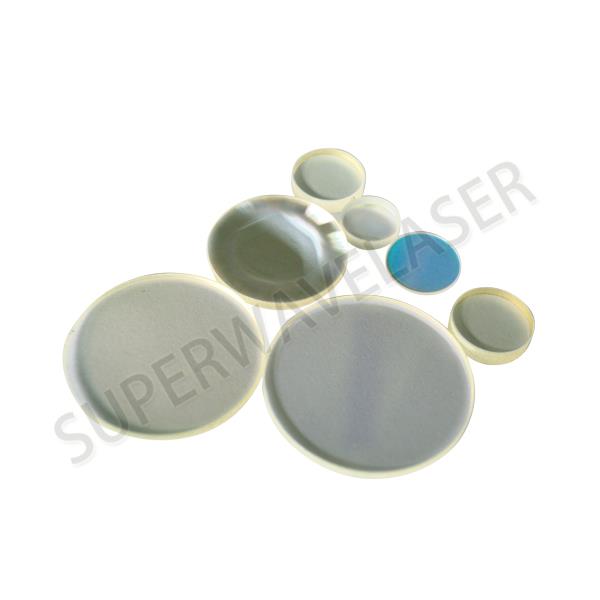
There are two main types of distortion in f - θ lenses:
- Pincushion distortion: In pincushion distortion, the laser spots near the edges of the scanning field are displaced further from the center than the ideal f - θ relationship predicts. This causes the image or pattern formed by the laser to appear as if it has been pulled towards the center at the edges, resembling a pincushion.
- Barrel distortion: Barrel distortion is the opposite of pincushion distortion. Here, the laser spots near the edges of the scanning field are displaced closer to the center than the ideal f - θ relationship. As a result, the image or pattern appears as if it has been bulged outwards at the edges, like a barrel.
Causes of Distortion
Several factors can contribute to the distortion of f - θ lenses:
- Optical design limitations: The design of the f - θ lens is a complex process that involves balancing multiple optical parameters. Imperfections in the design, such as incorrect choice of lens materials, improper curvature of lens surfaces, or sub - optimal arrangement of lens elements, can lead to distortion.
- Manufacturing errors: Even with a perfect design, manufacturing errors can introduce distortion. These errors can include inaccuracies in lens grinding, polishing, or centering. For example, if a lens surface is not ground to the correct curvature, it can cause the laser beam to deviate from its intended path, resulting in distortion.
- Environmental factors: Environmental conditions such as temperature and humidity can also affect the performance of f - θ lenses. Changes in temperature can cause the lens materials to expand or contract, altering the optical properties of the lens and leading to distortion. Similarly, high humidity can cause condensation on the lens surfaces, which can also affect the laser beam's propagation and introduce distortion.
Impacts of Distortion
The distortion of f - θ lenses can have significant impacts on the performance of laser scanning systems:
- Reduced accuracy: Distortion can cause the laser spots to be misaligned, leading to inaccurate marking, engraving, or cutting. This can result in defective products, especially in applications where high precision is required.
- Non - uniform scanning: Distortion can also cause non - uniform scanning across the target plane. This means that the laser power distribution may not be consistent, leading to uneven marking or engraving depths.
- Limited scanning area: Severe distortion can limit the usable scanning area of the f - θ lens. In some cases, the distortion may be so severe that the outer regions of the scanning field are unusable, reducing the overall efficiency of the laser scanning system.
How We Address Distortion in Our f - θ Lenses
As a professional f - θ lens supplier, we take several measures to minimize distortion in our products:
- Advanced optical design: Our team of experienced optical engineers uses state - of - the - art design software to optimize the optical design of our f - θ lenses. We carefully select lens materials with low dispersion and high refractive index stability to minimize the effects of chromatic aberration and temperature variations.
- Precision manufacturing: We employ advanced manufacturing techniques and strict quality control measures to ensure the accuracy of our lens production. Our manufacturing process includes precision grinding, polishing, and centering of lens elements to minimize manufacturing errors.
- Testing and calibration: Before our f - θ lenses are shipped to customers, they undergo rigorous testing and calibration. We use specialized optical testing equipment to measure the distortion of each lens and make necessary adjustments to ensure that it meets our strict quality standards.
Complementary Products for Laser Systems
In addition to f - θ lenses, we also offer a range of complementary products for laser systems, such as Collimating Lens, Laser Beam Expender, and Laser Focus Lens. These products can work together with our f - θ lenses to improve the overall performance of laser scanning systems.
Conclusion and Call to Action
Understanding the distortion of f - θ lenses is crucial for ensuring the optimal performance of laser scanning systems. At our company, we are committed to providing high - quality f - θ lenses with minimal distortion. Our expertise in optical design, precision manufacturing, and quality control allows us to deliver products that meet the strict requirements of our customers.
If you are in the market for f - θ lenses or other laser optical components, we invite you to contact us for a detailed discussion. Our team of experts will be happy to assist you in selecting the right products for your specific application. We look forward to working with you to achieve your laser processing goals.
References
- Smith, J. (2018). Optical Design for Laser Scanning Systems. Springer.
- Jones, A. (2020). Laser Optics Handbook. Wiley.


