

Hey there! As a supplier of CW (Continuous Wave) lasers, I often get asked about the different modulation methods for these lasers. In this blog post, I'll break down the various modulation techniques, their pros and cons, and how they can be applied in different industries.
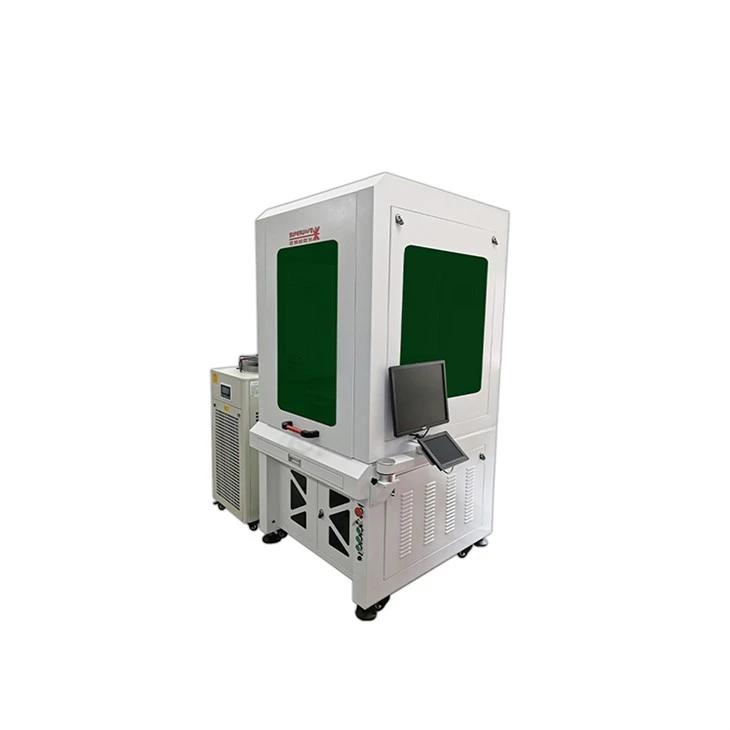

First off, let's understand what CW lasers are. A CW laser emits a continuous beam of light at a constant power level. Unlike pulsed lasers that emit light in short bursts, CW lasers provide a steady stream of energy. This makes them ideal for applications where a consistent and stable light source is required, such as laser cutting, welding, and material processing.
Now, let's dive into the modulation methods for CW lasers. There are several ways to modulate a CW laser, and each method has its own unique characteristics and applications.
1. Direct Modulation
Direct modulation is the simplest and most straightforward way to control the output of a CW laser. In this method, the current or voltage applied to the laser diode is varied to change the intensity of the laser beam. By adjusting the input current, we can control the power output of the laser, effectively modulating the beam.
One of the main advantages of direct modulation is its simplicity. It doesn't require any additional components or complex circuitry, making it cost - effective and easy to implement. However, direct modulation has some limitations. The modulation speed is limited by the response time of the laser diode, which can be relatively slow compared to other modulation methods. This makes it less suitable for high - speed applications.
2. External Modulation
External modulation involves using an external device, such as an electro - optic modulator (EOM) or an acousto - optic modulator (AOM), to control the laser beam. These modulators work by changing the properties of the light passing through them, such as its intensity, phase, or polarization.
Electro - Optic Modulator (EOM)
An EOM uses the electro - optic effect to change the refractive index of a crystal when an electric field is applied. This change in refractive index affects the phase and intensity of the light passing through the crystal, allowing us to modulate the laser beam. EOMs can achieve very high modulation speeds, making them suitable for applications that require fast data transmission or high - speed laser control.
However, EOMs are relatively expensive and require precise alignment and control. They also consume more power compared to direct modulation, which can be a drawback in some applications.
Acousto - Optic Modulator (AOM)
An AOM uses the acousto - optic effect to diffract light when an acoustic wave is applied. By changing the frequency and amplitude of the acoustic wave, we can control the intensity and direction of the diffracted light, effectively modulating the laser beam. AOMs are known for their high modulation speeds and good beam quality. They are also relatively compact and easy to integrate into laser systems.
But like EOMs, AOMs can be expensive, and they require a stable acoustic source. Additionally, the diffraction efficiency of AOMs can be affected by temperature and other environmental factors.
3. Pulse Width Modulation (PWM)
Pulse Width Modulation is a technique where the laser is turned on and off at a high frequency, and the duration of the on - time (pulse width) is varied to control the average power of the laser beam. By adjusting the pulse width, we can achieve different levels of power output without changing the peak power of the laser.
PWM is commonly used in applications where precise control of the average power is required, such as in laser marking and engraving. It allows for fine - tuning of the laser power, which can result in better quality and more consistent results. However, PWM can introduce some high - frequency noise into the laser beam, which may need to be filtered out in some applications.
4. Frequency Modulation (FM)
Frequency Modulation involves changing the frequency of the laser beam. This can be achieved by varying the current or voltage applied to the laser diode or by using an external modulator. FM is often used in applications such as laser communication, where the frequency of the laser beam can be used to encode information.
One of the advantages of FM is its ability to transmit information over long distances with relatively low interference. However, FM requires more complex modulation and demodulation techniques compared to other methods, which can increase the cost and complexity of the system.
Now, let's talk about how these modulation methods are applied in different industries.
In the manufacturing industry, CW lasers are widely used for welding and cutting. For example, our Enclosed CW Fiber Laser Welding Machine uses CW lasers with appropriate modulation methods to provide precise and efficient welding. The modulation techniques ensure that the laser power can be adjusted according to the specific requirements of the welding process, resulting in high - quality welds.
In the electronics industry, CW lasers are used for circuit board manufacturing and micro - machining. Our Fiber Chain Laser Welding Machine Manufacturer offers machines that can be customized with different modulation methods to meet the high - precision requirements of electronic component manufacturing.
In the medical industry, CW lasers are used for various applications, such as laser surgery and dermatology. The modulation of CW lasers in these applications is crucial for controlling the energy delivered to the tissue, ensuring safe and effective treatment. Our Fiber Continuous Laser Scanner Welding Machine can be adapted for medical applications with the right modulation settings.
If you're in the market for CW lasers or laser - based equipment, and you're interested in learning more about how different modulation methods can benefit your specific application, don't hesitate to reach out. We're here to help you find the best solution for your needs. Whether you're looking for a high - speed modulation for data transmission or a precise power control for manufacturing, we've got the expertise and the products to meet your requirements.
In conclusion, understanding the different modulation methods for CW lasers is essential for choosing the right laser system for your application. Each method has its own advantages and limitations, and the choice depends on factors such as the required modulation speed, power control, and cost. By working with a reliable CW laser supplier, you can ensure that you get the most out of your laser system.
References
- Saleh, B. E. A., & Teich, M. C. (2007). Fundamentals of Photonics. Wiley.
- Siegman, A. E. (1986). Lasers. University Science Books.


