

In the dynamic landscape of the Battery Industry, the efficient cooling of batteries is a critical factor that significantly impacts their performance, lifespan, and safety. As a leading battery supplier, we understand the importance of implementing effective cooling methods to ensure the optimal operation of our products. This blog post will delve into the different types of battery cooling methods, exploring their advantages, disadvantages, and applications.
Air Cooling
Air cooling is one of the most common and straightforward methods of battery cooling. It involves using air to dissipate heat from the battery cells. The process can be either passive or active.
Passive Air Cooling
Passive air cooling relies on natural convection to remove heat from the battery. This method is simple and cost - effective, as it does not require any additional power - consuming components. The heat generated by the battery cells rises and is replaced by cooler air, creating a natural flow. However, passive air cooling has its limitations. It is less efficient compared to other methods, especially in high - power applications where large amounts of heat are generated. The cooling rate is also highly dependent on the ambient temperature, and in hot environments, it may not be sufficient to maintain the battery at an optimal temperature.
Active Air Cooling
Active air cooling, on the other hand, uses fans to force air over the battery cells. This method can significantly enhance the cooling efficiency compared to passive air cooling. By controlling the speed of the fans, the cooling rate can be adjusted according to the battery's heat generation. Active air cooling is relatively easy to implement and is suitable for a wide range of applications, from small consumer electronics to electric vehicles. However, it also has some drawbacks. The fans consume additional power, which can reduce the overall energy efficiency of the system. Additionally, the fans can generate noise, which may be a concern in some applications.
Liquid Cooling
Liquid cooling is a more advanced and efficient method of battery cooling. It involves circulating a liquid coolant through a system of channels or pipes in contact with the battery cells to absorb and transfer heat away from the battery.
Direct Liquid Cooling
In direct liquid cooling, the coolant comes into direct contact with the battery cells. This method provides excellent heat transfer efficiency as the coolant can directly absorb the heat from the cells. However, direct liquid cooling requires a high - level of insulation and sealing to prevent the coolant from leaking and causing damage to the battery. It is also more complex and expensive to implement compared to air cooling.
Indirect Liquid Cooling
Indirect liquid cooling is a more common approach. In this method, the coolant flows through a heat exchanger that is in contact with the battery cells. The heat from the cells is transferred to the heat exchanger and then carried away by the coolant. Indirect liquid cooling is less risky than direct liquid cooling as there is no direct contact between the coolant and the battery cells. It is also more flexible in terms of system design and can be easily integrated into different battery pack configurations. However, the heat transfer efficiency is slightly lower compared to direct liquid cooling.
Phase - Change Material (PCM) Cooling
Phase - change materials are substances that can absorb or release a large amount of heat during a phase change, such as from solid to liquid or vice versa. PCM cooling involves using these materials to absorb the heat generated by the battery cells.
When the battery temperature rises, the PCM absorbs the heat and changes from a solid to a liquid state. As the temperature decreases, the PCM releases the stored heat and solidifies again. PCM cooling has several advantages. It is a passive cooling method, which means it does not require any external power source. It can also provide a more stable temperature environment for the battery as the phase - change process occurs at a relatively constant temperature. However, PCM cooling has limited heat - storage capacity, and in high - power applications, additional cooling methods may be required.
Heat Pipe Cooling
Heat pipes are highly efficient heat transfer devices that use the evaporation and condensation of a working fluid to transfer heat. A heat pipe consists of a sealed tube with a wick structure inside and a small amount of working fluid.
One end of the heat pipe is in contact with the battery cells, where the heat is absorbed, causing the working fluid to evaporate. The vapor then travels to the other end of the heat pipe, where it condenses and releases the heat. The condensed fluid is then returned to the hot end by the wick structure. Heat pipe cooling offers high heat transfer efficiency and can transfer heat over long distances with minimal temperature gradients. It is also a passive cooling method, which makes it energy - efficient. However, heat pipes can be relatively expensive and may require careful design and installation to ensure optimal performance.
Comparison of Cooling Methods
Each of these cooling methods has its own set of advantages and disadvantages, and the choice of cooling method depends on several factors, including the application, the power requirements of the battery, the available space, and the cost.
For small - scale applications with low power requirements, such as consumer electronics, air cooling may be sufficient. It is simple, cost - effective, and easy to implement. However, for high - power applications, such as electric vehicles and large - scale energy storage systems, liquid cooling or a combination of different cooling methods may be necessary to ensure efficient heat dissipation and maintain the battery at an optimal temperature.
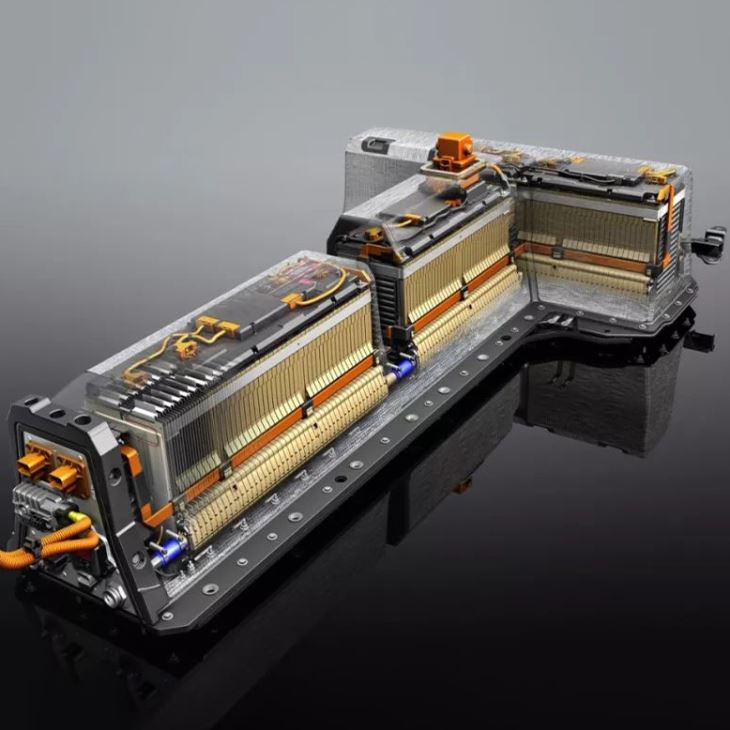

Our Expertise as a Battery Supplier
As a leading battery supplier, we have extensive experience in implementing different battery cooling methods. We understand that the choice of cooling method can have a significant impact on the performance and lifespan of the battery. Our team of experts can work with you to design and develop a customized cooling solution that meets your specific requirements.
We use state - of - the - art technology and high - quality materials to ensure the reliability and efficiency of our cooling systems. Whether you need a simple air - cooled battery pack for a small device or a complex liquid - cooled system for a large - scale application, we have the expertise and resources to deliver a solution that meets your needs.
Contact Us for Your Battery Cooling Needs
If you are interested in learning more about our battery cooling solutions or would like to discuss your specific requirements, we encourage you to contact us. Our sales team is ready to assist you in finding the best cooling method for your battery application. We can provide detailed information about our products, offer technical support, and help you with the procurement process.
References
- "Battery Thermal Management Systems: Design and Simulation" by P. P. Mukherjee and S. K. Das
- "Thermal Management of Electric Vehicle Batteries" by J. Wang and X. Zhang
- "Advances in Battery Cooling Technologies" by R. K. Agarwal and A. K. Singh


