

Q - switches are crucial components in many laser systems, playing a vital role in generating high - energy, short - pulse laser output. As a Q - switch supplier, I have encountered various issues and failures in the field. Understanding the common failures of a Q - switch is essential for both laser system designers and end - users to ensure reliable and efficient operation of their laser equipment.
1. Optical Damage
One of the most prominent failures in a Q - switch is optical damage. When a Q - switch is exposed to high - intensity laser beams, the optical components can experience damage. This can occur in the form of surface damage or bulk damage.
Surface damage usually starts as small pits or scratches on the surface of the optical elements. These can be caused by debris or contaminants on the surface, which absorb laser energy and create local hot spots. Over time, these hot spots can cause the material to melt or vaporize, leading to surface degradation. For example, if the Q - switch is not properly cleaned before installation, dust particles can act as absorption centers and initiate surface damage.
Bulk damage, on the other hand, occurs within the volume of the optical material. High - energy laser pulses can induce nonlinear optical effects, such as multiphoton absorption. This can lead to the creation of free electrons and ionization within the material, which can cause lattice damage and ultimately degrade the optical performance. The threshold for bulk damage depends on factors such as the laser wavelength, pulse duration, and the material properties of the Q - switch.
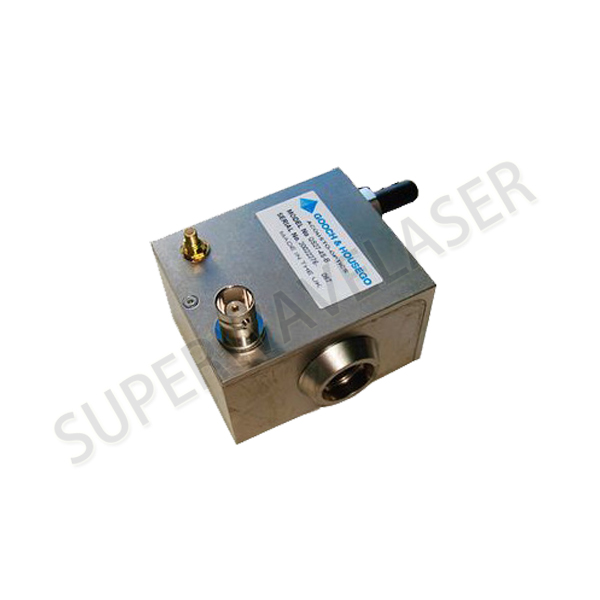
To prevent optical damage, it is crucial to select Q - switches with appropriate damage thresholds for the specific laser system. Additionally, proper cleaning and handling procedures should be followed to minimize the presence of contaminants on the optical surfaces. Learn more about Q - switch options designed to withstand high - energy applications.
2. Electrical Failures
Q - switches often rely on electrical signals for their operation, and electrical failures can be a common problem. One of the main electrical issues is the malfunction of the driver circuit. The driver circuit is responsible for providing the appropriate voltage and timing signals to the Q - switch.
Faulty components in the driver circuit, such as capacitors, resistors, or transistors, can lead to inaccurate voltage levels or improper timing. For instance, if a capacitor in the driver circuit has a reduced capacitance value, it may not be able to store and release the electrical energy quickly enough, resulting in a delayed or weakened Q - switch operation.
Another electrical failure mode is electro - static discharge (ESD). ESD can occur when there is a sudden flow of electricity between two objects with different electrical potentials. In the case of a Q - switch, an ESD event can damage sensitive electronic components in the driver circuit or the Q - switch itself. To mitigate the risk of ESD, proper grounding and anti - static handling procedures should be implemented during the installation and maintenance of the Q - switch.
Regular testing and inspection of the driver circuit can help detect and prevent electrical failures. Our company offers high - quality Q - switches with reliable driver circuits, and we can also provide technical support for troubleshooting electrical issues.
3. Thermal Issues
Thermal management is a critical aspect of Q - switch operation. During the Q - switching process, a significant amount of energy is dissipated in the form of heat. If this heat is not properly removed, it can cause several problems.
Overheating can lead to thermal lensing effects in the Q - switch. Thermal lensing occurs when the refractive index of the optical material changes due to temperature gradients within the material. This can distort the laser beam and degrade the beam quality. For example, in a solid - state Q - switch, if the temperature rises unevenly across the crystal, the laser beam passing through the crystal will experience different refractive indices, resulting in beam distortion.
Excessive heat can also cause thermal stress within the Q - switch components. Thermal stress can lead to mechanical failures, such as cracking or delamination of the optical elements. To address thermal issues, it is important to use appropriate cooling methods, such as water - cooling or air - cooling, depending on the power requirements of the laser system.
Our Q - switches are designed with efficient thermal management features to minimize the impact of heat generation. We can also provide guidance on selecting the most suitable cooling solution for your specific laser application.
4. Alignment Problems
Proper alignment of the Q - switch within the laser cavity is essential for its optimal performance. Misalignment can lead to a significant reduction in the Q - switching efficiency and the output power of the laser.
Mechanical vibrations or improper mounting can cause the Q - switch to move out of alignment. Even small displacements can have a large impact on the laser beam path through the Q - switch. For example, if the Q - switch is tilted slightly, the laser beam may not pass through the proper region of the Q - switch, resulting in incomplete modulation.
To ensure accurate alignment, it is recommended to use precision mounting fixtures and alignment tools. Initial alignment should be carried out carefully during the installation of the Q - switch, and periodic checks should be performed to detect and correct any alignment drifts over time.
5. Material Degradation
The materials used in Q - switches can degrade over time due to various factors. For example, in electro - optic Q - switches, the crystal materials may experience degradation in their electro - optic properties. This can be caused by exposure to high - energy radiation, temperature cycling, or chemical contamination.
In acousto - optic Q - switches, the acoustic transducers can degrade. The transducer converts electrical signals into acoustic waves, and over time, the bonding between the transducer and the acoustic medium can weaken, leading to a decrease in the acoustic wave amplitude and efficiency.
Material degradation can gradually reduce the performance of the Q - switch, and in some cases, it may require the replacement of the entire Q - switch. Our company provides Q - switches made from high - quality materials with excellent long - term stability, and we can also offer advice on extending the service life of the Q - switches.
Conclusion
In conclusion, understanding the common failures of a Q - switch is essential for maintaining the reliability and performance of laser systems. Optical damage, electrical failures, thermal issues, alignment problems, and material degradation are some of the most frequent problems that can occur.
As a Q - switch supplier, we are committed to providing high - quality products and comprehensive technical support. Our team of experts can help you select the most suitable Q - switch for your application and provide solutions to prevent and troubleshoot any potential failures.
If you are in need of Q - switches for your laser systems and want to discuss your specific requirements, please feel free to contact us for a consultation. We look forward to working with you to ensure the success of your laser projects.
References
- Siegman, A. E. (1986). Lasers. University Science Books.
- Saleh, B. E. A., & Teich, M. C. (2007). Fundamentals of Photonics. Wiley.
- Kassamakov, I. K., & Kaminskii, A. A. (2011). "Q - Switching of Solid - State Lasers". in Solid - State Lasers: Advanced Topics. Springer.


