

As a seasoned glass rod supplier, I've received numerous inquiries about the process of making glass rods with specific diameters. Crafting glass rods to meet precise diameter requirements is both an art and a science, involving a series of well - defined steps and careful control of various factors. In this blog, I'll walk you through the entire process, sharing insights from my years of experience in the industry.
Raw Material Selection
The first and perhaps most crucial step in making a glass rod with a specific diameter is selecting the right raw materials. The quality of the raw materials directly impacts the final properties of the glass rod, including its transparency, strength, and thermal stability.
We typically start with high - purity silica sand, which is the primary component of most glass types. Depending on the desired properties of the glass rod, we may also add other additives such as soda ash, limestone, and various metal oxides. For example, adding boron oxide can improve the glass's thermal shock resistance, while adding lead oxide can increase its refractive index.
Once the raw materials are selected, they are carefully weighed and mixed in the correct proportions. This ensures that the chemical composition of the glass is consistent, which is essential for achieving a uniform diameter and other desired properties throughout the rod.
Melting Process
After the raw materials are mixed, they are loaded into a furnace for melting. The melting process is carried out at extremely high temperatures, typically ranging from 1500°C to 1700°C, depending on the type of glass being produced.
During melting, the raw materials undergo a series of chemical reactions, transforming from solid particles into a homogeneous liquid state. This process can take several hours to ensure that all the raw materials are fully melted and mixed.
To maintain a stable melting environment and control the quality of the glass, we use advanced furnace technologies. These technologies allow us to precisely control the temperature, pressure, and atmosphere inside the furnace. For example, some furnaces are equipped with oxygen - enriched combustion systems, which can increase the melting efficiency and reduce energy consumption.
Shaping the Glass Rod
Once the glass has reached a molten state, it is ready to be shaped into a rod with the desired diameter. There are several methods for shaping glass rods, and the choice of method depends on factors such as the diameter, length, and quantity of the rods being produced.
Drawing Method
One of the most common methods is the drawing method. In this process, a small amount of molten glass is first attached to a drawing rod. The drawing rod is then slowly pulled upwards while the molten glass is continuously fed from the furnace. As the glass is pulled, it cools and solidifies, forming a long, thin rod.
To control the diameter of the glass rod during drawing, we use a combination of techniques. First, we carefully control the speed at which the drawing rod is pulled. A faster pulling speed will result in a thinner rod, while a slower speed will produce a thicker rod. Second, we adjust the temperature of the molten glass. A higher temperature makes the glass more fluid, allowing it to be drawn into a thinner rod, while a lower temperature makes the glass more viscous, resulting in a thicker rod.
Extrusion Method
Another method for shaping glass rods is extrusion. In the extrusion process, the molten glass is forced through a die with a specific shape and size. The die determines the cross - sectional shape and diameter of the glass rod.
Extrusion is particularly suitable for producing glass rods with complex cross - sectional shapes or large diameters. However, it requires more sophisticated equipment and precise control of the extrusion pressure and temperature.
Annealing
After the glass rod is shaped, it undergoes an annealing process. Annealing is a heat - treatment process that relieves internal stresses in the glass, improving its strength and durability.
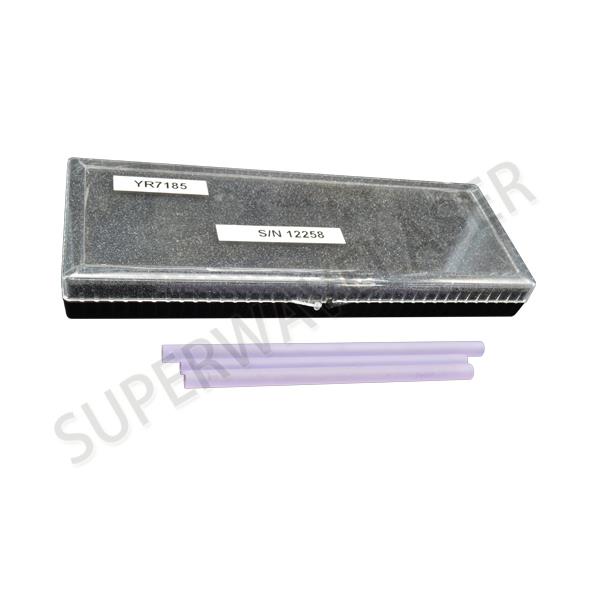
The glass rod is placed in an annealing furnace, where it is heated to a specific temperature and then slowly cooled at a controlled rate. This slow cooling process allows the glass molecules to rearrange themselves, reducing the internal stresses that can cause the glass to crack or break.
The annealing temperature and cooling rate depend on the type of glass and the diameter of the rod. For example, larger - diameter glass rods may require a slower cooling rate to ensure that the internal stresses are fully relieved.
Quality Control
Throughout the entire process of making glass rods, quality control is of utmost importance. We use a variety of techniques to ensure that the glass rods meet the specific diameter requirements and other quality standards.
First, we use precision measuring instruments such as micrometers and calipers to measure the diameter of the glass rods at multiple points along their length. This allows us to detect any variations in diameter and make adjustments to the production process if necessary.
Second, we conduct visual inspections to check for surface defects such as bubbles, scratches, and cracks. Any rods with significant defects are removed from the production line.
In addition, we perform other tests to evaluate the mechanical, optical, and thermal properties of the glass rods. For example, we may test the refractive index, hardness, and thermal expansion coefficient of the glass to ensure that it meets the requirements of our customers.
Applications of Glass Rods
Glass rods with specific diameters have a wide range of applications in various industries. In the optical industry, they are used to manufacture lenses, prisms, and other optical components. For example, high - precision glass rods are essential for the production of Laser Crystal, which are used in lasers for medical, industrial, and scientific applications.
In the electronics industry, glass rods are used as insulators and substrates for electronic devices. Their high electrical resistance and excellent thermal stability make them ideal for these applications.
In the chemical industry, glass rods are used in laboratory equipment such as test tubes, burettes, and pipettes. Their chemical inertness and transparency make them suitable for handling a wide range of chemicals.
Contact for Purchase and Collaboration
If you're in need of glass rods with specific diameters for your business or project, we'd be more than happy to assist you. Our company has extensive experience in producing high - quality glass rods to meet the diverse needs of our customers. We can provide customized solutions based on your specific requirements, ensuring that you get the perfect glass rods for your application.
Whether you need a small quantity of prototype glass rods or a large - scale production run, we have the capabilities and resources to meet your demand. Contact us today to start a discussion about your glass rod needs. We look forward to working with you and providing you with the best - in - class glass rod products.
References
- "Glass Science and Technology" by D. R. Uhlmann and N. J. Kreidl
- "Handbook of Glass Manufacture" by H. Bach and N. Neugebauer
- Industry standards and guidelines related to glass rod production and quality control.


