

Hey there! I'm from a CW (Continuous Wave) laser supplier, and today I'm gonna break down how a CW laser works. It's a pretty cool technology that has a wide range of applications, from industrial manufacturing to medical treatments.
Let's start with the basics. A CW laser, as the name suggests, emits a continuous beam of light. This is different from pulsed lasers, which send out short bursts of light. The continuous output of a CW laser makes it ideal for applications where a steady, consistent beam is needed.
The Core Components of a CW Laser
First off, every CW laser has a gain medium. This is the heart of the laser, where the magic happens. The gain medium can be a solid, like a crystal or glass, a liquid, or a gas. For example, in a CO₂ laser, the gain medium is a mixture of carbon dioxide, nitrogen, and helium gases. In a fiber laser, the gain medium is an optical fiber doped with rare - earth elements like ytterbium.
When energy is pumped into the gain medium, something called population inversion occurs. Population inversion is like a party where more people are in the "excited" state than the "ground" state. In the context of a laser, atoms or molecules in the gain medium absorb energy from the pump source and get excited to a higher energy level.
The pump source is another crucial component. It provides the energy needed to create that population inversion. There are different types of pump sources. For solid - state lasers, flash lamps or diodes are commonly used. In a fiber laser, diode lasers are often used as the pump source. These diodes emit light at a specific wavelength that is absorbed by the rare - earth ions in the fiber, exciting them to a higher energy level.
The Laser Cavity
Once we have population inversion in the gain medium, we need a way to amplify the light. That's where the laser cavity comes in. The laser cavity is made up of two mirrors. One mirror is fully reflective, and the other is partially reflective.
The excited atoms or molecules in the gain medium emit photons when they return to their ground state. These photons bounce back and forth between the two mirrors in the laser cavity. As they do, they stimulate other excited atoms or molecules to emit more photons of the same wavelength and in the same phase. This process is called stimulated emission, and it's what amplifies the light.
The partially reflective mirror allows a small portion of the amplified light to escape, and this is the laser beam that we use for various applications. The design of the laser cavity, including the distance between the mirrors and their reflectivity, affects the properties of the laser beam, such as its intensity, divergence, and wavelength.
Different Types of CW Lasers and Their Applications
There are several types of CW lasers, each with its own unique characteristics and applications.
CO₂ Lasers
CO₂ lasers are widely used in industrial applications. They operate at a wavelength of around 10.6 micrometers, which is in the infrared region. This wavelength is well - absorbed by many materials, making CO₂ lasers great for cutting, welding, and engraving. For example, in the manufacturing of metal parts, a CO₂ laser can precisely cut through thick sheets of metal with high accuracy.
Fiber Lasers
Fiber lasers have become very popular in recent years. They offer high efficiency, excellent beam quality, and are very reliable. Fiber lasers are used in a variety of applications, including laser marking, welding, and cutting. They are especially well - suited for applications where high - precision work is required, such as in the electronics industry.
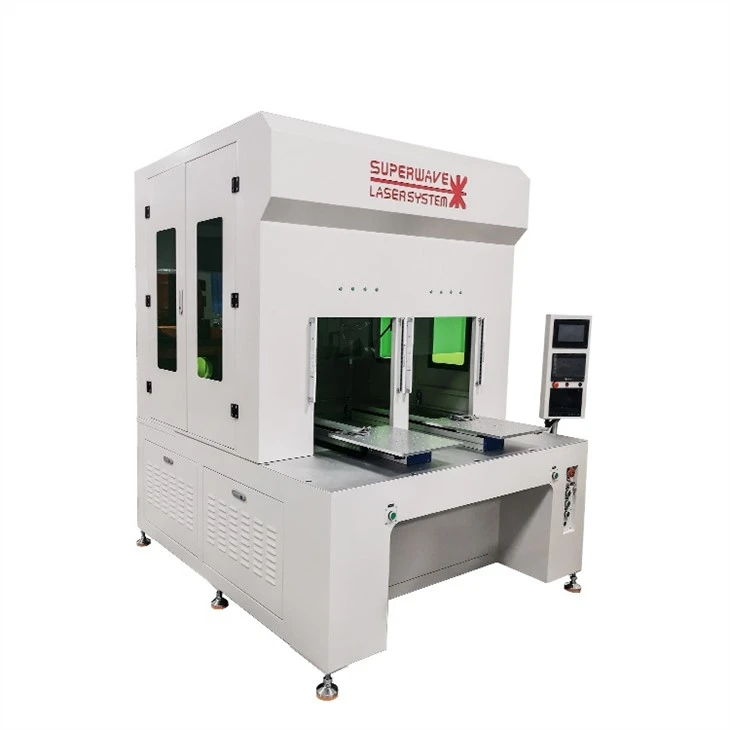
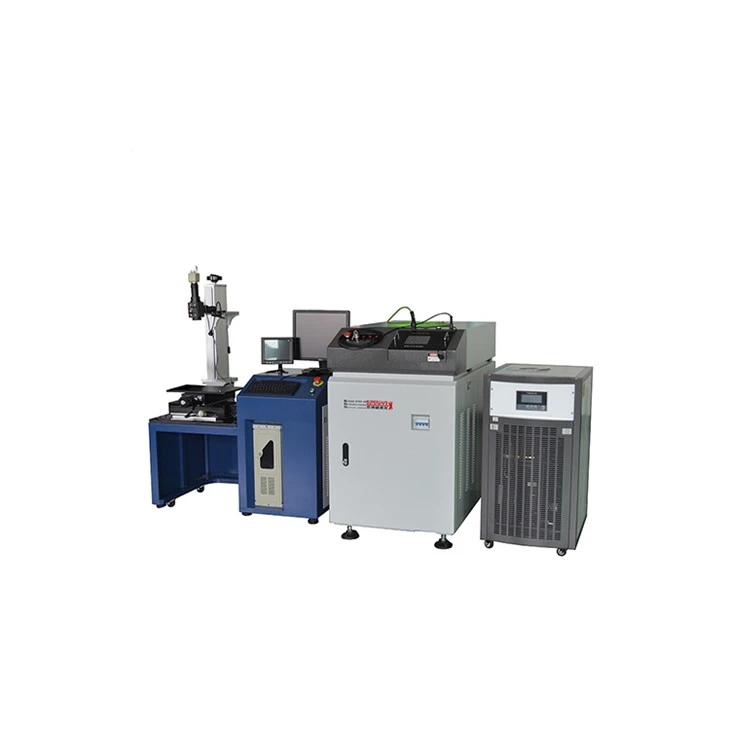
If you're in the market for a CW laser for welding applications, we have some great options. Check out our Robot & Double Y - axis Fiber Laser Welder. This machine is designed for high - precision welding tasks and can handle complex welding jobs with ease.
We also have the YAG automatic Laser Welding Machine. YAG lasers are known for their high peak power and are ideal for welding small parts with high precision.
And for those who need a more versatile welding solution, our Multi - station Fiber Laser Welding Machine is a great choice. It allows for multiple welding stations, increasing productivity and efficiency.
How the Output is Controlled
The output of a CW laser can be controlled in several ways. One way is by adjusting the power of the pump source. By increasing or decreasing the power of the pump, we can change the amount of energy being pumped into the gain medium, which in turn affects the intensity of the laser beam.
Another way to control the output is by using optical components such as attenuators. Attenuators are devices that reduce the intensity of the laser beam. They can be used to fine - tune the power of the laser for different applications.
Advantages of CW Lasers
One of the biggest advantages of CW lasers is their continuous output. This makes them ideal for applications where a steady, consistent beam is required. For example, in laser welding, a continuous beam ensures a smooth and even weld.
CW lasers also tend to have a high beam quality. The beam is usually very focused and has a low divergence, which means it can be used for high - precision work over long distances.
They are also relatively easy to operate and maintain. With proper care and regular maintenance, a CW laser can have a long service life.
Conclusion
So, there you have it! That's how a CW laser works. It's a fascinating technology that combines physics, engineering, and materials science. Whether you're in the manufacturing, medical, or research field, a CW laser can offer a reliable and efficient solution for your needs.
If you're interested in learning more about our CW lasers or have any questions about which laser is right for your application, don't hesitate to reach out. We're here to help you find the perfect laser solution for your business.
References
- "Laser Physics" by Peter W. Milonni and Joseph H. Eberly
- "Handbook of Laser Technology and Applications" edited by Richard S. Quimby, et al.


