

Hey there! As a CO2 laser supplier, I often get asked about how these amazing machines work. So, I thought I'd break it down for you in a way that's easy to understand.
Let's start with the basics. A CO2 laser is a type of gas laser that uses a mixture of carbon dioxide, nitrogen, and helium as the lasing medium. The laser's operation is based on the principle of stimulated emission, a concept introduced by Albert Einstein way back in 1917.
The heart of the CO2 laser is the laser tube. Inside this tube, there's a gas mixture. When an electrical current is applied to the tube, it excites the gas molecules. The nitrogen molecules are first excited by the electrical discharge. These excited nitrogen molecules then transfer their energy to the carbon dioxide molecules.
The carbon dioxide molecules, once excited, jump to a higher energy state. When they return to their lower energy state, they release photons. These photons are the light particles that make up the laser beam. But here's the cool part - these photons stimulate other excited carbon dioxide molecules to release more photons of the same wavelength and in the same direction. This process is called stimulated emission, and it's what creates the intense, focused beam of light that we know as a laser.
The laser tube has mirrors at both ends. One mirror is fully reflective, and the other is partially reflective. The photons bounce back and forth between these mirrors, increasing in number with each pass. When the intensity of the light reaches a certain level, some of the photons pass through the partially reflective mirror, creating the laser beam that exits the tube.
Now, let's talk about what makes CO2 lasers so special. They operate at a wavelength of around 10.6 micrometers, which is in the infrared region of the electromagnetic spectrum. This wavelength is well - absorbed by many non - metallic materials such as wood, plastic, glass, and leather. That's why CO2 lasers are so great for applications like engraving, cutting, and marking these materials.
When it comes to engraving, the high - energy laser beam vaporizes the surface of the material, creating a permanent mark. For cutting, the laser beam melts or vaporizes the material along the cutting path, allowing for precise and clean cuts. And in marking applications, the laser beam changes the color or surface texture of the material to create a visible mark.
One of the advantages of CO2 lasers is their versatility. They can be used in a wide range of industries. For example, in the woodworking industry, CO2 lasers can be used to engrave detailed designs on furniture, musical instruments, or wooden signs. In the packaging industry, they can mark product information on plastic or cardboard packaging.
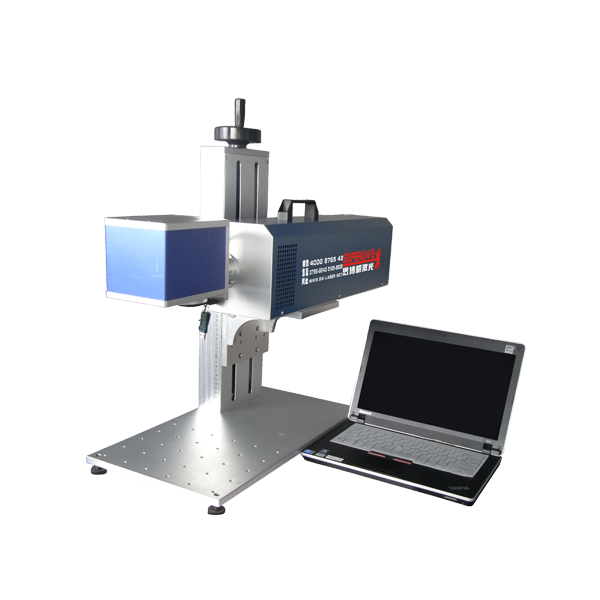
If you're in the market for a CO2 laser, we've got some great options. Check out our CO2 Laser Marking Machine For Non - metals. It's designed specifically for marking non - metallic materials with high precision. And if you need something more portable, our Portable CO2 Laser Marking Machine is a great choice. It allows you to take your laser marking capabilities on the go.
We understand that different customers have different needs. That's why we offer a variety of CO2 laser systems with different power levels, beam qualities, and features. Whether you're a small business looking to add some custom engraving to your products or a large manufacturing company in need of high - volume marking and cutting solutions, we've got you covered.
If you're interested in learning more about our CO2 lasers or are thinking about making a purchase, don't hesitate to reach out. We're here to answer all your questions and help you find the perfect laser system for your specific requirements. Our team of experts is ready to guide you through the selection process and ensure that you get the most out of your investment.

In conclusion, CO2 lasers are a powerful and versatile tool that can revolutionize the way you work with non - metallic materials. Their unique operating principle allows for precise and efficient engraving, cutting, and marking. So, if you're in the market for a CO2 laser, give us a chance to show you what we can do.
References:
- Einstein, A. (1917). On the Quantum Theory of Radiation. Physikalische Zeitschrift, 18, 121 - 128.
- Hecht, J. (2005). Understanding Lasers: An Entry - Level Guide. OSA Press.


