Hey there! As a glass rod supplier, I've been getting a lot of questions lately about the strength of glass rods. So, I thought I'd take a moment to break it down and share what I've learned over the years.
First off, let's talk about what we mean by "strength" when it comes to glass rods. There are a few different aspects to consider, like tensile strength, compressive strength, and flexural strength.
Tensile strength is all about how much pulling force a glass rod can handle before it breaks. Glass is actually pretty strong in tension compared to some other materials, but it's also brittle. That means it doesn't stretch or deform much before it snaps. The tensile strength of a glass rod depends on a few factors, like the type of glass it's made from and how it's been treated. For example, borosilicate glass, which is commonly used in glass rods, has a relatively high tensile strength. It can withstand a fair amount of pulling force without breaking.
Compressive strength, on the other hand, is about how much pushing force a glass rod can take. Glass is extremely strong in compression. You can put a lot of pressure on a glass rod from the top, and it'll usually hold up just fine. That's why glass is often used in applications where it needs to support heavy loads, like in some types of construction or in laboratory equipment.
Flexural strength is related to how well a glass rod can bend without breaking. When you try to bend a glass rod, it experiences both tension and compression on different sides. The flexural strength determines how much bending it can handle. Again, the type of glass and its treatment play a big role here. Some glasses are more flexible than others, and special treatments can increase the flexural strength.
Now, let's get into the factors that can affect the strength of a glass rod. One of the most important factors is the composition of the glass. Different types of glass have different chemical compositions, which can greatly impact their strength. For example, soda - lime glass is a common type of glass, but it's not as strong as borosilicate glass. Borosilicate glass contains boron oxide, which gives it better thermal and mechanical properties. It can handle sudden temperature changes better and has higher strength overall.
Another factor is the manufacturing process. How the glass rod is made can have a huge impact on its strength. If the glass is not properly annealed (a process of slowly cooling the glass to relieve internal stresses), it can be much weaker. During annealing, the glass is heated to a specific temperature and then cooled very slowly. This helps to reduce internal stresses that could cause the glass to break more easily.
Surface defects also play a big role in the strength of a glass rod. Even small scratches or cracks on the surface can significantly reduce the strength. When a glass rod has a surface defect, it acts as a stress concentration point. When stress is applied, the defect can cause the glass to break more easily. That's why it's so important to handle glass rods carefully and keep their surfaces free from damage.
So, why is all this important? Well, if you're in the market for glass rods, understanding their strength is crucial. Depending on your application, you'll need to choose a glass rod with the right strength characteristics. For example, if you're using glass rods in a high - temperature environment, you'll want a rod with good thermal and mechanical strength, like borosilicate glass. If you need a rod that can withstand a lot of bending, you'll need to look for one with high flexural strength.
At our company, we offer a wide range of glass rods with different strengths and properties. Whether you need a glass rod for a scientific experiment, a manufacturing process, or any other application, we've got you covered. We take great care in selecting the right type of glass and using the best manufacturing processes to ensure that our glass rods are of the highest quality.
If you're interested in laser applications, you might also want to check out Laser Crystal. Laser crystals are often used in conjunction with glass rods in laser systems. They can enhance the performance of the laser and are an important part of many high - tech applications.
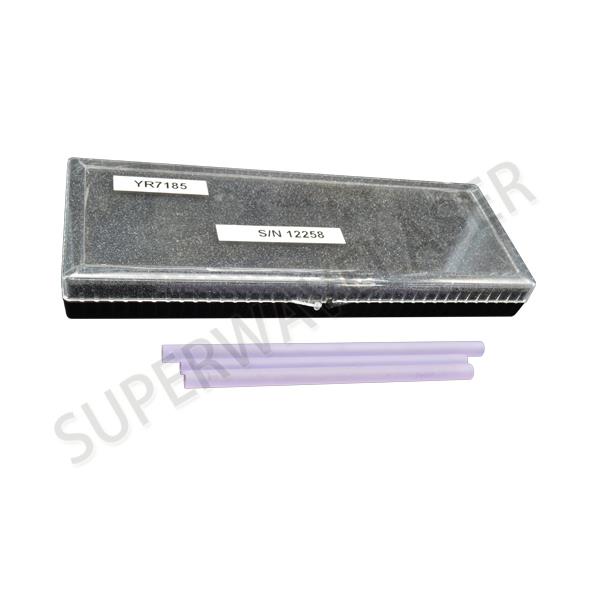
So, if you're looking for high - quality glass rods, don't hesitate to reach out to us. We're here to help you find the perfect glass rod for your needs. Whether you have questions about strength, composition, or any other aspect of glass rods, our team of experts is ready to assist you. We can provide you with detailed information and samples so you can make an informed decision.
In conclusion, the strength of a glass rod is a complex topic that depends on many factors. By understanding these factors, you can choose the right glass rod for your specific application. And if you're in the market for glass rods, we're the supplier you can trust. Contact us today to start a conversation about your glass rod needs.
References
- "Glass Science and Technology" by D. R. Uhlmann and N. J. Kreidl
- "Handbook of Glass Properties" edited by W. A. Weyl and E. R. Stookey