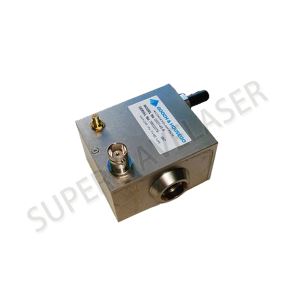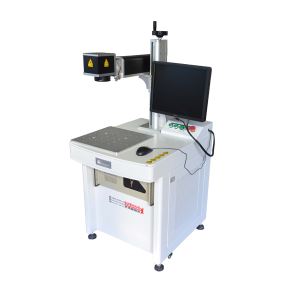
As a Q-switch supplier, I've witnessed firsthand the importance of stability in Q-switched lasers. A stable Q-switched laser is crucial for a wide range of applications, from industrial manufacturing to medical treatments. In this blog post, I'll share some insights on how to improve the stability of a Q-switched laser.
Understanding the Basics of Q-Switched Lasers
Before diving into the ways to improve stability, it's essential to understand the basic principles of Q-switched lasers. A Q-switched laser is a type of laser that can produce high-intensity, short-duration pulses. The "Q" in Q-switching refers to the quality factor of the laser cavity. By controlling the Q-factor, we can store energy in the laser medium and then release it in a short, intense pulse.
The key components of a Q-switched laser include the laser gain medium, the Q-switch, and the optical cavity. The laser gain medium is responsible for amplifying the light, while the Q-switch controls the release of the stored energy. The optical cavity provides the feedback necessary for lasing.
Factors Affecting the Stability of Q-Switched Lasers
Several factors can affect the stability of a Q-switched laser. These include:
- Temperature: Temperature fluctuations can cause changes in the refractive index of the laser components, which can affect the laser's performance. For example, a change in temperature can cause the optical cavity length to change, leading to a shift in the laser's wavelength.
- Mechanical Vibration: Mechanical vibrations can cause misalignment of the laser components, which can lead to a decrease in the laser's output power and stability.
- Power Supply: A stable power supply is essential for the proper operation of a Q-switched laser. Fluctuations in the power supply can cause variations in the laser's output power and pulse characteristics.
- Q-Switch Performance: The performance of the Q-switch itself can also affect the stability of the laser. A high-quality Q-switch with consistent performance is crucial for achieving stable laser operation.
Strategies to Improve the Stability of Q-Switched Lasers
Now that we understand the factors affecting the stability of Q-switched lasers, let's discuss some strategies to improve it.
Temperature Control
One of the most effective ways to improve the stability of a Q-switched laser is to control the temperature of the laser components. This can be achieved by using a temperature control system, such as a thermoelectric cooler (TEC) or a water cooling system.
A TEC is a solid-state device that can transfer heat from one side to the other when an electric current is applied. By using a TEC, we can maintain a constant temperature of the laser components, which helps to reduce the effects of temperature fluctuations.
Water cooling systems are also commonly used to control the temperature of Q-switched lasers. These systems circulate water through the laser components to remove heat. Water cooling systems are more effective than TECs for high-power lasers, as they can dissipate more heat.
Vibration Isolation
To minimize the effects of mechanical vibrations, it's important to isolate the laser from external sources of vibration. This can be achieved by using vibration isolation mounts or platforms.
Vibration isolation mounts are designed to absorb and dampen vibrations, reducing the amount of vibration that reaches the laser components. These mounts can be made of materials such as rubber or springs, which have good vibration isolation properties.
Vibration isolation platforms are larger structures that can support the entire laser system. These platforms are typically made of heavy materials, such as concrete or steel, and are designed to isolate the laser from vibrations in the surrounding environment.
Power Supply Stabilization
A stable power supply is essential for the proper operation of a Q-switched laser. To ensure a stable power supply, it's important to use a high-quality power supply with good voltage regulation.
Power supplies with built-in voltage regulation can automatically adjust the output voltage to compensate for changes in the input voltage. This helps to maintain a constant power output, which is crucial for the stability of the laser.
In addition to using a high-quality power supply, it's also important to protect the laser from power surges and spikes. This can be achieved by using a surge protector or an uninterruptible power supply (UPS).
Q-Switch Selection and Optimization
The performance of the Q-switch itself can have a significant impact on the stability of the laser. When selecting a Q-switch, it's important to choose a high-quality device with consistent performance.
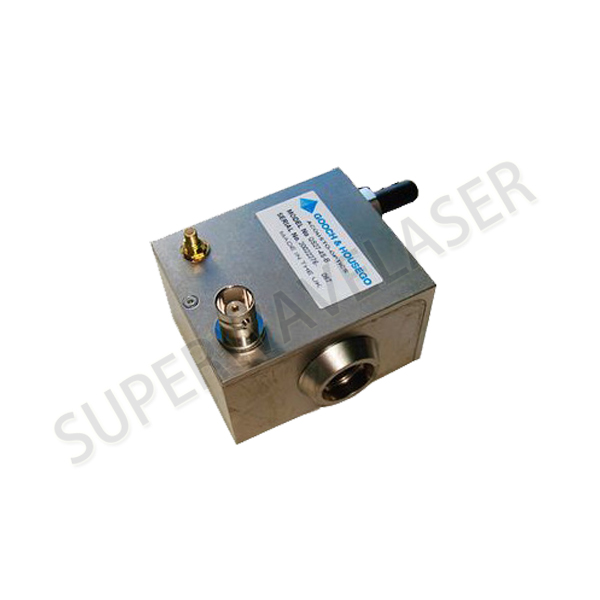
There are several types of Q-switches available, including electro-optic Q-switches, acousto-optic Q-switches, and passive Q-switches. Each type of Q-switch has its own advantages and disadvantages, and the choice of Q-switch will depend on the specific requirements of the laser application.
Once a Q-switch has been selected, it's important to optimize its performance. This can be achieved by adjusting the Q-switch parameters, such as the switching time, the repetition rate, and the pulse width. By optimizing the Q-switch performance, we can improve the stability and efficiency of the laser.
Conclusion
Improving the stability of a Q-switched laser is essential for achieving reliable and consistent performance. By understanding the factors affecting the stability of Q-switched lasers and implementing the strategies discussed in this blog post, we can significantly improve the stability of the laser.
As a Q-switch supplier, we offer a wide range of high-quality Q-switches that are designed to provide stable and reliable performance. If you're interested in learning more about our Q-switches or improving the stability of your Q-switched laser, please feel free to contact us for a consultation. We'll be happy to help you find the best solution for your needs.
References
- Siegman, A. E. (1986). Lasers. University Science Books.
- Koechner, W. (2006). Solid-State Laser Engineering. Springer.
- Demtröder, W. (2010). Laser Spectroscopy: Basic Concepts and Instrumentation. Springer.