The application of optical components in laser systems has been a subject of extensive research and development in recent years. As a leading supplier of f - θ lenses, I am often asked whether f - θ lenses can be used in laser communication systems. In this blog, I will explore this question in depth, considering the characteristics of f - θ lenses, the requirements of laser communication systems, and the potential benefits and limitations of their combination.
Understanding f - θ Lenses
F - θ lenses, also known as f - theta lenses, are a type of focusing lens commonly used in laser scanning systems. Their primary function is to provide a linear relationship between the deflection angle of the laser beam and the position on the image plane. This characteristic makes them ideal for applications where a uniform scanning speed and a flat field of focus are required, such as laser marking, engraving, and cutting.
The design of f - θ lenses is based on the principle of correcting for the distortion that occurs in a simple focusing lens when the beam is deflected off - axis. By carefully shaping the lens surfaces and selecting appropriate optical materials, f - θ lenses can achieve a high degree of linearity and a large field of view. They typically consist of multiple lens elements arranged in a specific configuration to minimize aberrations and ensure accurate beam focusing.
Requirements of Laser Communication Systems
Laser communication systems rely on the transmission of laser beams through free space or optical fibers to transmit information. These systems require high - power, high - quality laser sources, efficient beam collimation and focusing, and reliable detection and demodulation techniques.
One of the key requirements in laser communication is the ability to maintain a stable and well - defined beam over long distances. This requires precise control of the beam divergence, which can be achieved through the use of collimating lenses and beam expanders. Additionally, the beam needs to be focused accurately onto the receiver to ensure maximum power transfer and signal quality.
Another important aspect of laser communication is the need for high - speed data transmission. This often involves modulating the laser beam at high frequencies, which requires a laser source and optical components that can respond quickly to changes in the signal.
Potential Use of f - θ Lenses in Laser Communication Systems
Beam Scanning and Alignment
In some laser communication scenarios, such as satellite - to - satellite or ground - to - satellite communication, the transmitter and receiver may need to be aligned precisely. F - θ lenses can be used in conjunction with beam steering mirrors to scan the laser beam over a large area and find the optimal alignment with the receiver. The linear scanning characteristic of f - θ lenses allows for efficient and accurate beam positioning, reducing the time and complexity of the alignment process.
Multi - Spot Communication
F - θ lenses can also be used to create multiple focused spots in the image plane. This can be exploited in multi - spot laser communication systems, where multiple data channels can be transmitted simultaneously. By using a single laser source and an f - θ lens, different parts of the beam can be focused onto different receivers, increasing the data transmission capacity of the system.
Flat - Field Focusing
In some cases, the receiver in a laser communication system may have a flat detection surface. F - θ lenses, with their ability to provide a flat field of focus, can ensure that the laser beam is focused uniformly across the entire detection area. This can improve the signal - to - noise ratio and the overall performance of the communication system.
Limitations and Challenges
Chromatic Aberration
One of the main limitations of f - θ lenses is chromatic aberration. Since laser communication systems often use lasers with a specific wavelength or a narrow wavelength range, chromatic aberration can cause a shift in the focal point for different wavelengths, leading to a degradation in the beam quality and the signal strength. Specialized coating and material selection are required to minimize chromatic aberration in f - θ lenses used in laser communication.
High - Speed Modulation
As mentioned earlier, laser communication systems require high - speed data transmission, which involves high - frequency modulation of the laser beam. F - θ lenses need to be able to handle these rapid changes in the beam characteristics without introducing significant distortion or delay. This requires careful design and optimization of the lens material and structure to ensure fast response times.
Environmental Factors
Laser communication systems are often deployed in harsh environments, including space, deserts, and oceans. F - θ lenses need to be able to withstand extreme temperatures, humidity, and radiation without significant degradation in performance. This requires the use of robust materials and protective coatings.
Related Optical Components in Laser Communication Systems
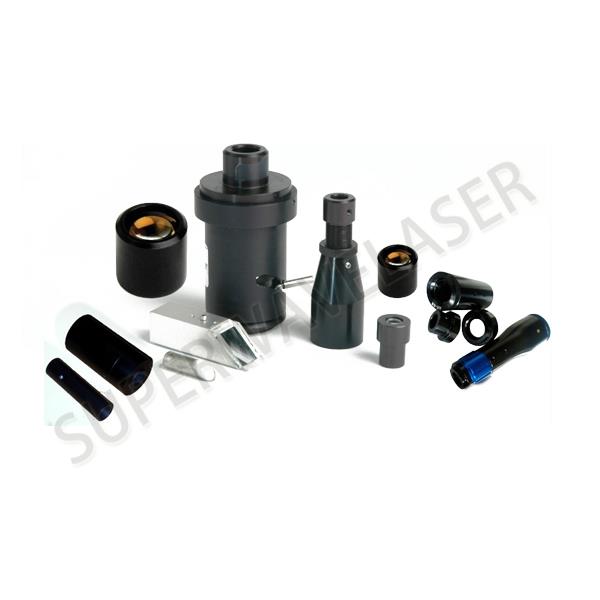
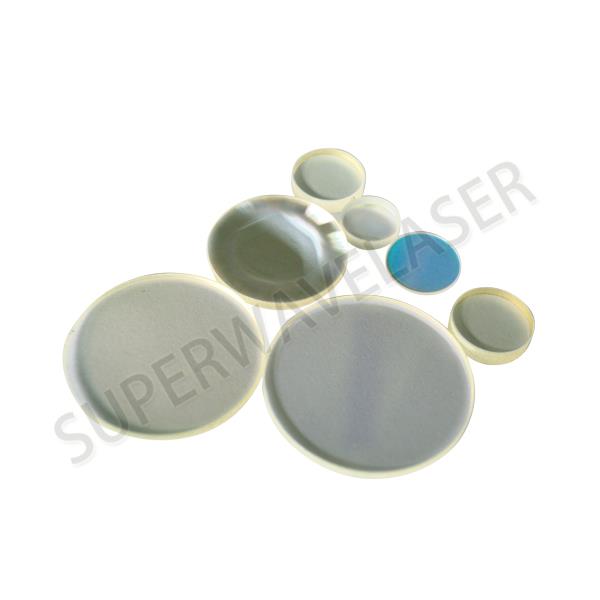
In addition to f - θ lenses, other optical components play important roles in laser communication systems. For example, Laser Beam Expender can be used to increase the diameter of the laser beam, reducing its divergence and allowing it to travel longer distances without significant spreading. Collimating Lens are used to make the laser beam parallel, ensuring that it can be accurately directed towards the receiver. And Laser Focus Lens are used to focus the beam onto the receiver for efficient power transfer. These components, when used in combination with f - θ lenses, can enhance the performance of laser communication systems.
Conclusion and Call to Action
In conclusion, while there are some challenges and limitations, f - θ lenses have the potential to be used in laser communication systems. Their unique characteristics, such as linear scanning and flat - field focusing, can offer solutions to some of the problems faced in beam alignment, multi - spot communication, and signal quality.
If you are interested in exploring the use of f - θ lenses in your laser communication systems or need more information about our high - quality f - θ lenses, please feel free to contact us. We are committed to providing the best optical solutions for your specific needs and ensuring the success of your laser communication projects.
References
- Smith, J. (2015). Introduction to Laser Optics. Elsevier.
- Jones, A. (2018). Advanced Laser Communication Technologies. Wiley.
- Brown, K. (2020). Optical Components for Laser Systems. SPIE Publications.